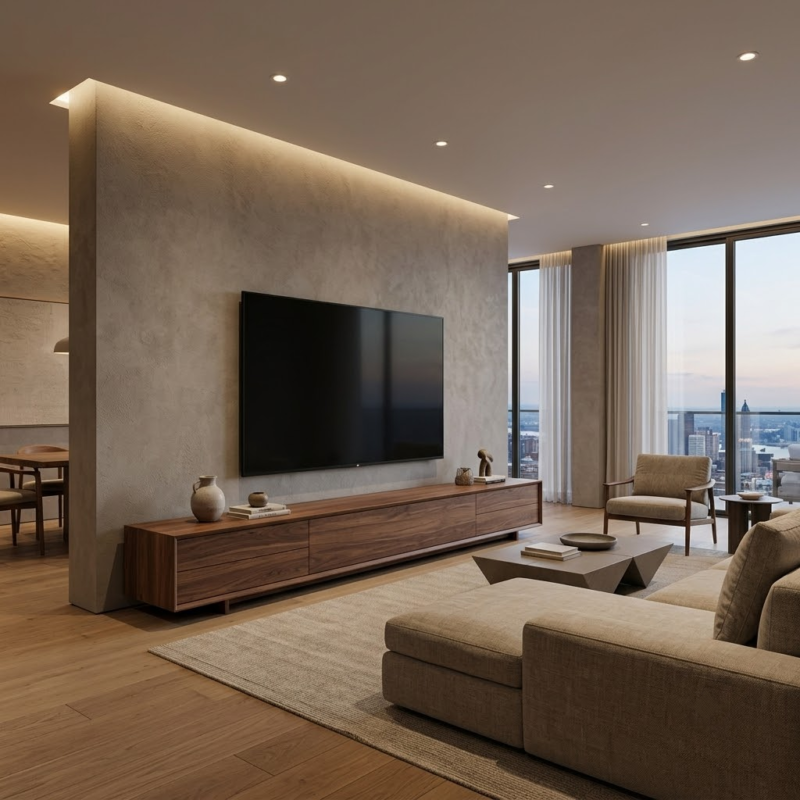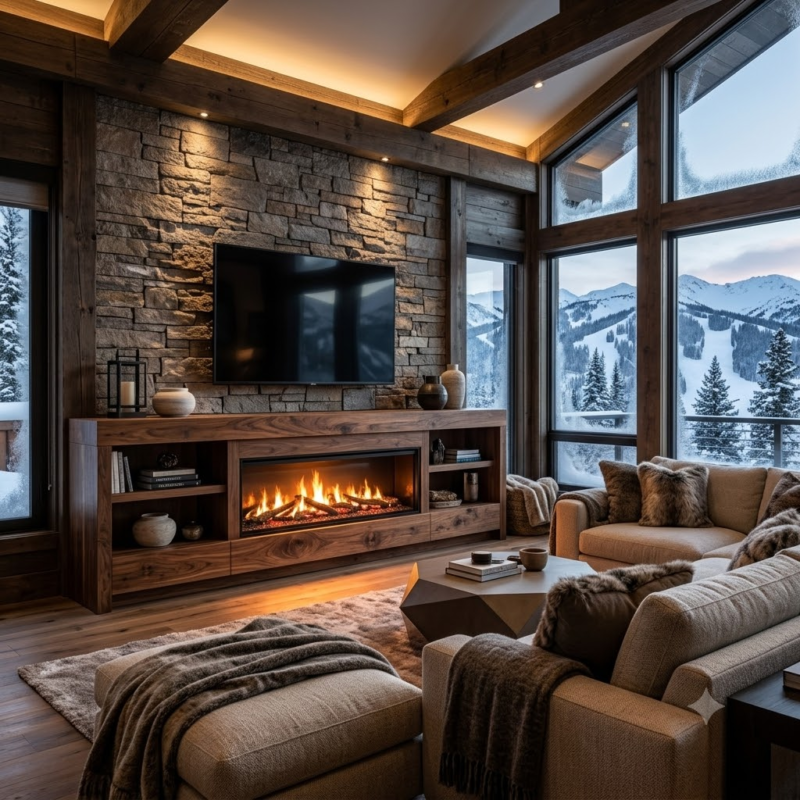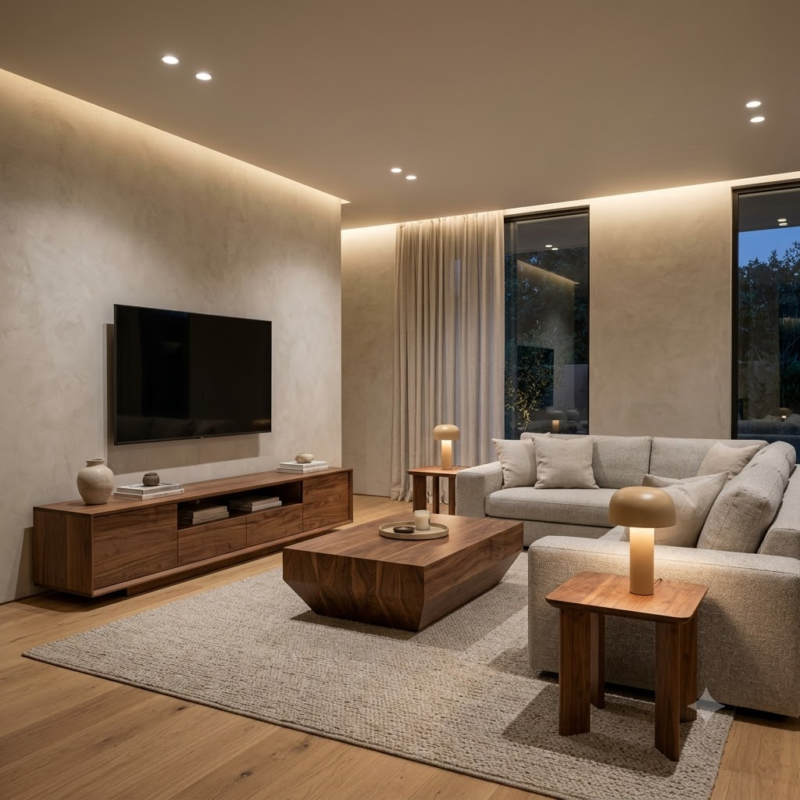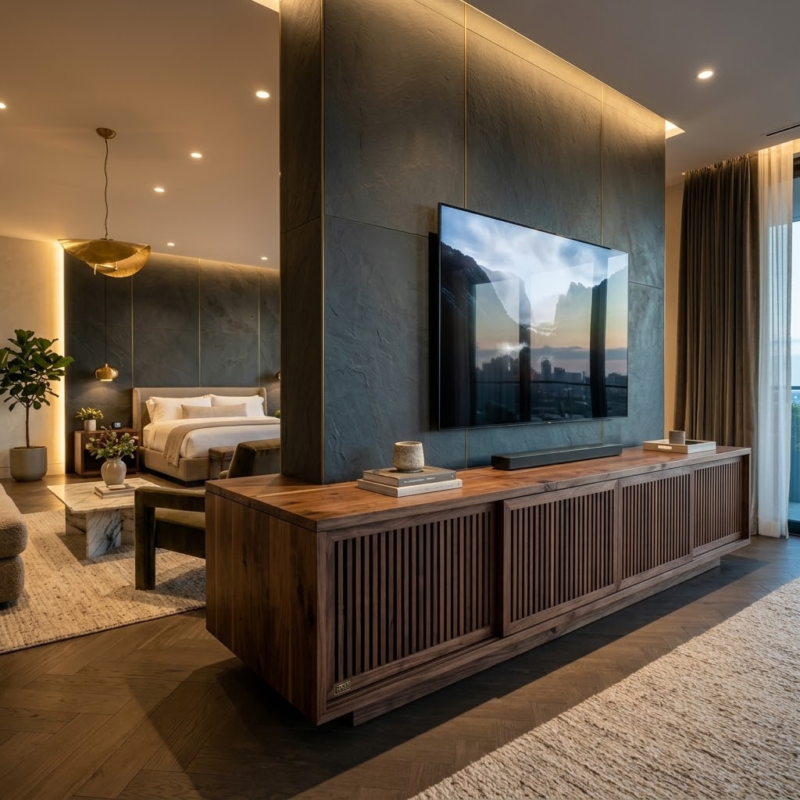
Floating Wall-Mounted vs. Freestanding Commercial TV Stands: Structural Specs for Hotels & Multi-Family Developments

⚡ Quick Takeaway for Hotel Developers & FF&E Buyers
- Housekeeping Efficiency: Floating TV stands wholesale drastically reduce housekeeping time per room by eliminating the need to move heavy furniture to vacuum or mop underneath.
- ADA Compliance: Wall-mounted consoles inherently resolve the strict 27-inch knee clearance and 4-inch path-of-travel protrusion limits required for accessible hotel suites.
- Wall-Load Engineering: Commercial floating consoles cannot rely on standard drywall anchors. They require heavy-duty French Cleat bracket systems spanning multiple metal wall studs to bear 200+ lb loads safely.
- The Freestanding Advantage: Traditional freestanding commercial TV cabinets offer superior internal cubic storage capacity (ideal for housing mini-fridges) and require zero specialized wall installation labor.
Introduction: The Architectural Shift in Hospitality Media
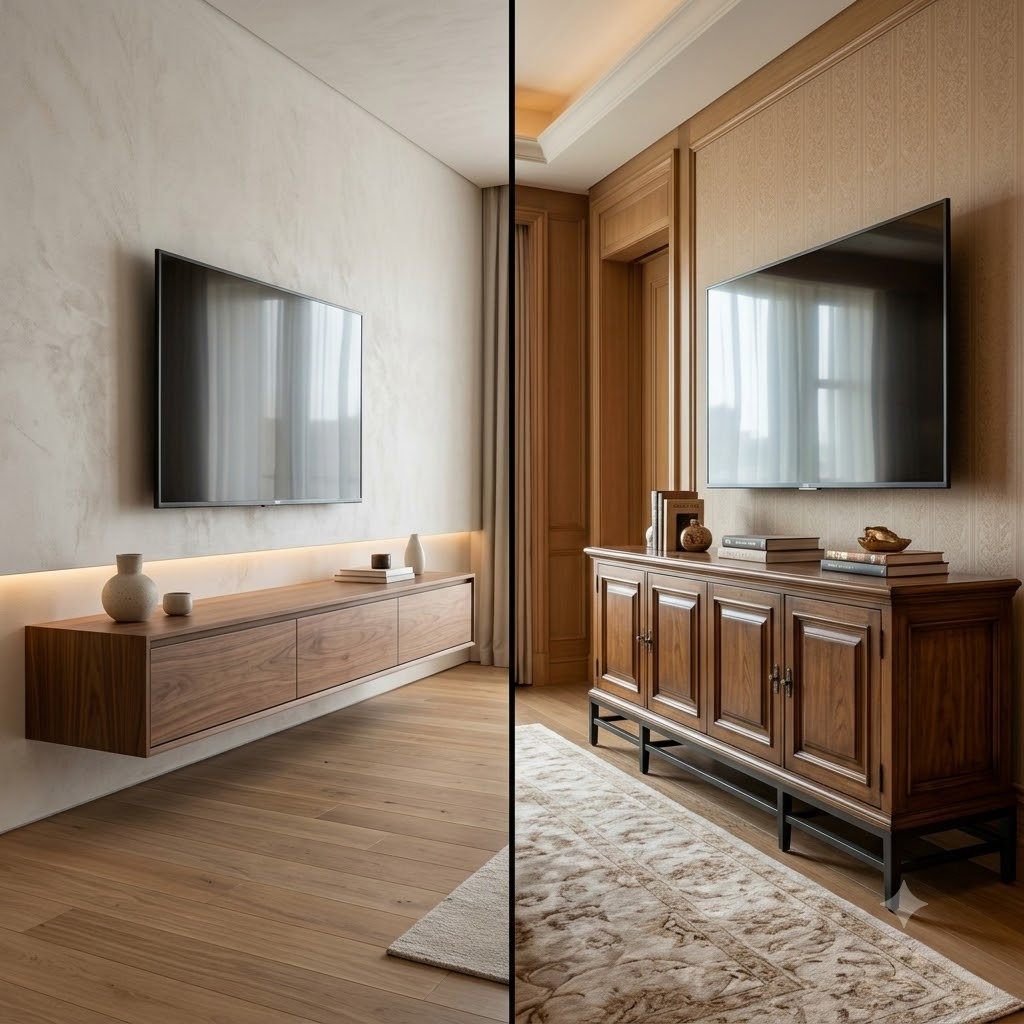
When designing guestrooms for a boutique hotel, a luxury resort, or a high-end multi-family apartment complex, the media console dictates the spatial flow of the entire room. Over the past five years, hospitality architecture has experienced a massive shift away from heavy, floor-bound casegoods toward minimalist, “floating” millwork.
However, the decision between specifying floating TV stands wholesale versus traditional freestanding commercial TV cabinets goes far beyond aesthetics. It fundamentally impacts installation labor costs, wall structural engineering, housekeeping operational speed, and strict ADA (Americans with Disabilities Act) accessibility compliance.
As a premier wall mounted media console manufacturer and B2B furniture supplier, MMK Furniture Makers (operated by MMK TRADE INC) engineers both typologies for the rigors of the US commercial market. This guide dissects the technical specifications, structural risks, and operational ROI of both designs to help FF&E procurement managers make data-driven sourcing decisions.
1. Floating Wall-Mounted TV Stands: The Modern Aesthetic
Floating media consoles are bolted directly into the wall architecture, hovering above the floor without legs. They create an illusion of expansive space, making small urban hotel rooms or studio apartments feel significantly larger and less cluttered.
The French Cleat Engineering Mandate
In residential settings, DIYers often use basic drywall anchors to mount light shelves. In a commercial hotel room, guests may lean or sit on a floating console. Relying on drywall toggles is a catastrophic liability risk.
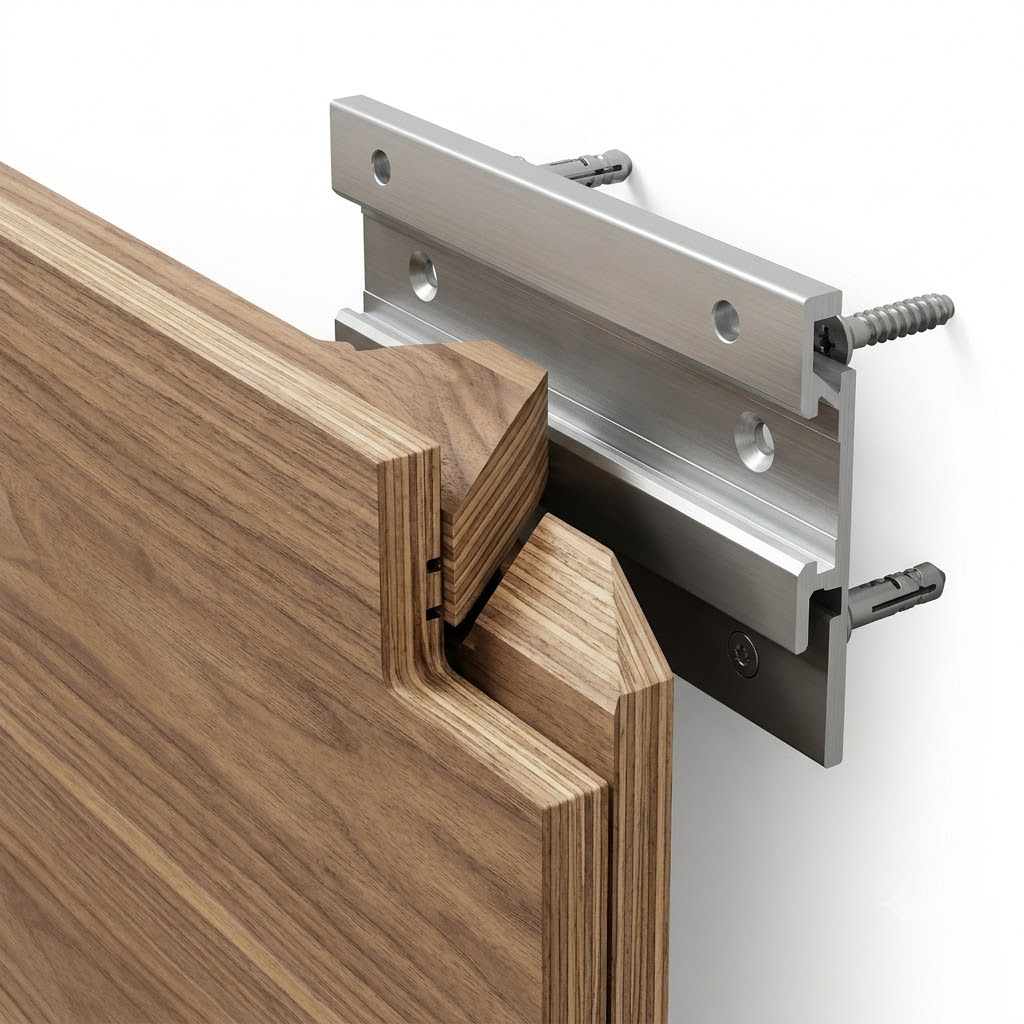
At MMK TRADE INC, every wholesale TV stand designed for wall-mounting utilizes a commercial French Cleat system. This involves a heavy-duty, angled aluminum or solid wood bracket bolted directly across multiple metal or wood wall studs (typically spaced 16″ or 24″ on center). The matching reverse-angled bracket on the back of the media console drops securely into the wall bracket, distributing the downward load across the entire span of the wall rather than relying on point-load drywall anchors. This ensures a static load capacity exceeding 200+ lbs.
✅ Floating Pros:
- Maximum floor visibility makes rooms appear larger.
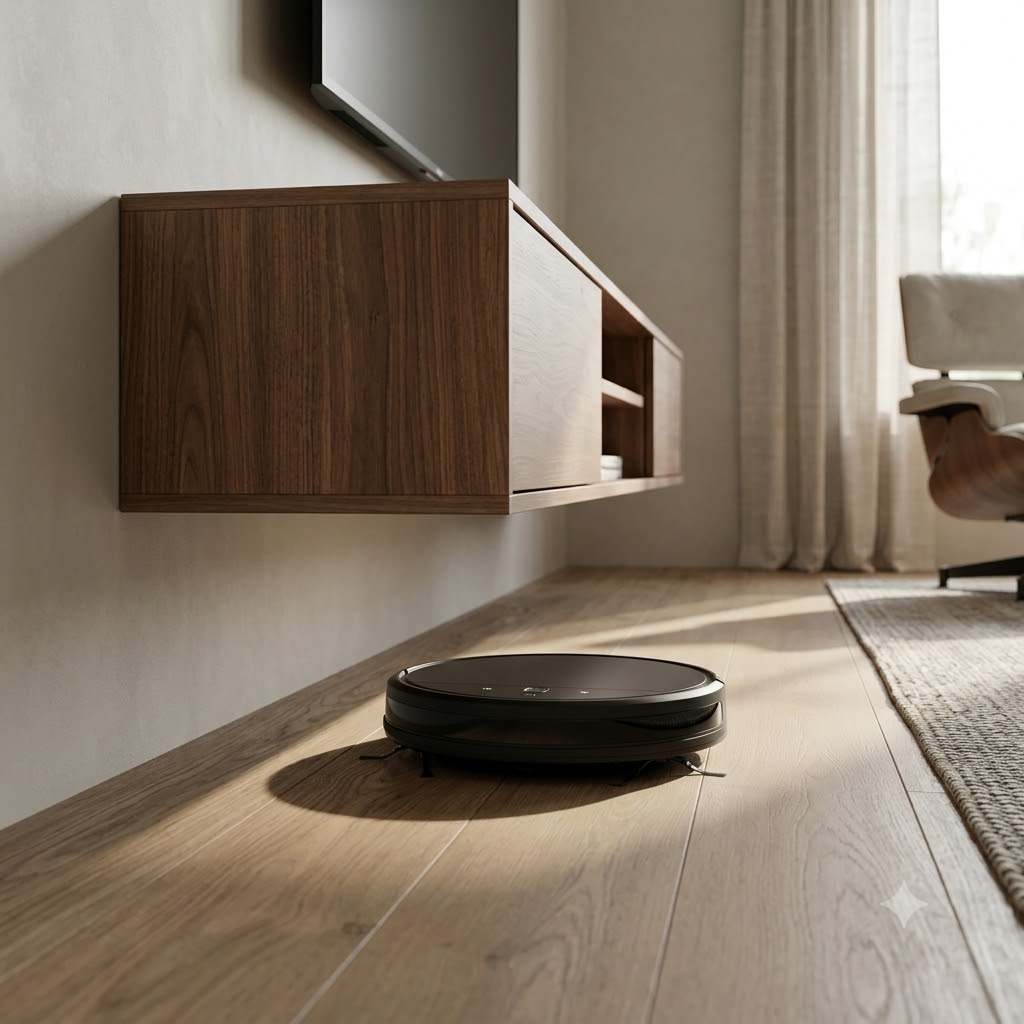
- Zero obstruction for housekeeping mops and robotic vacuums.
- Easily complies with ADA wheelchair approach dimensions.
❌ Floating Cons:
- Requires skilled labor (carpenters) to locate studs and install.
- Cannot safely house heavy, vibrating appliances like mini-fridges.
- Limited internal height reduces overall storage volume.
2. Freestanding Commercial TV Cabinets: High-Capacity Utility
The traditional freestanding console rests entirely on the floor, either via a solid plinth base (kickplate) or metal legs. For family resorts, extended-stay hotels, and senior living facilities, the freestanding commercial TV cabinet remains the dominant choice due to its massive utility and ease of installation.
Appliance Integration & Capacity
The primary advantage of a floor-bound unit is load-bearing capacity. If the hotel room design requires the media console to also house a mini-fridge, a microwave, or a heavy hotel safe, a freestanding unit is mandatory. MMK engineers these high-capacity cabinets with reinforced base panels, concealed central 5th-leg supports, and rear thermal ventilation voids to prevent enclosed appliances from overheating.
✅ Freestanding Pros:
- Zero installation labor required (simply unbox and place against the wall).
- Massive internal cubic storage capacity.
- Capable of safely housing heavy, vibrating mini-fridges and safes.
❌ Freestanding Cons:
- Dust and debris collect underneath units with legs, slowing housekeeping.
- Units with drawers require mandatory ASTM F2057 anti-tip wall anchoring kits.
3. The 5-Point Engineering & Operations Showdown
To assist FF&E procurement teams in evaluating their hotel or multi-family project requirements, we have mapped out the operational impacts of both designs:
| Specification Metric | Floating Wall-Mounted Console | Freestanding Cabinet |
|---|---|---|
| Maximum Load Capacity | 150 – 200 lbs (Dependent on wall studs) | 300+ lbs (Direct floor transfer) |
| On-Site Installation Cost | High (Requires carpenters/stud mapping) | Zero (Drop in place) |
| Anti-Tip Risk (ASTM F2057) | Zero Risk (Permanently bolted) | Requires wall tethering if drawers are present |
| Cable Management | Must route cables inside the wall (Behind drywall) | Easy to hide behind the cabinet back panel |
| Ideal Project Application | Modern Boutique Hotels, Urban Micro-Apartments | Extended Stay Resorts, Assisted Living, Retail Catalogs |
4. ADA Compliance & Housekeeping Optimization
The ADA 4-Inch Protrusion Rule
The Americans with Disabilities Act (ADA) strictly dictates the “Path of Travel” in hotel corridors and within accessible guestrooms. Any wall-mounted object with a leading edge between 27 inches and 80 inches off the floor cannot protrude more than 4 inches into the circulation path (to protect visually impaired guests using canes). When acting as a wall mounted media console manufacturer, MMK engineers ultra-slim profile consoles that meet these stringent architectural codes without sacrificing aesthetic depth.
The 27-Inch Knee Clearance Rule
If a section of the media console doubles as a writing desk or vanity, ADA standards require a minimum unobstructed knee clearance of 27 inches high, 30 inches wide, and 19 inches deep. Floating consoles naturally excel here, as the absence of front legs or plinth bases provides immediate, unrestricted wheelchair access.
Housekeeping Speed
In a 200-key hotel, saving 2 minutes of housekeeping time per room equates to over 6 hours of labor saved per day. Floating TV stands allow vacuums and mops to glide effortlessly underneath. If a freestanding design is chosen, we strongly recommend specifying a flush-to-floor plinth base (kickplate) rather than 4-inch metal legs, eliminating the dark crevices where dust bunnies and lost guest items accumulate.
5. B2B Commercial TV Stand FAQ
Does MMK TRADE INC supply the French Cleat mounting hardware with floating units?
Can a floating media console be flat-packed for container shipping?
Are freestanding units compliant with ASTM F2057 if they do not have drawers?
Ready to Engineer Your Hospitality FF&E Layout?
Partner with MMK Furniture Makers for ADA-compliant, structurally guaranteed commercial media consoles.