Inside the Frame: Kiln-Dried Hardwood, Sinuous Springs & High-Resiliency Foam Specs for OEM Sofa Manufacturing

⚡ Quick Takeaway for B2B Furniture Buyers
- The Failure of Retail Seating: Most retail sofas “bottom out” within 12 months because they rely on low-density foam (1.5 lbs/cu.ft) and weak particleboard frames stapled together.
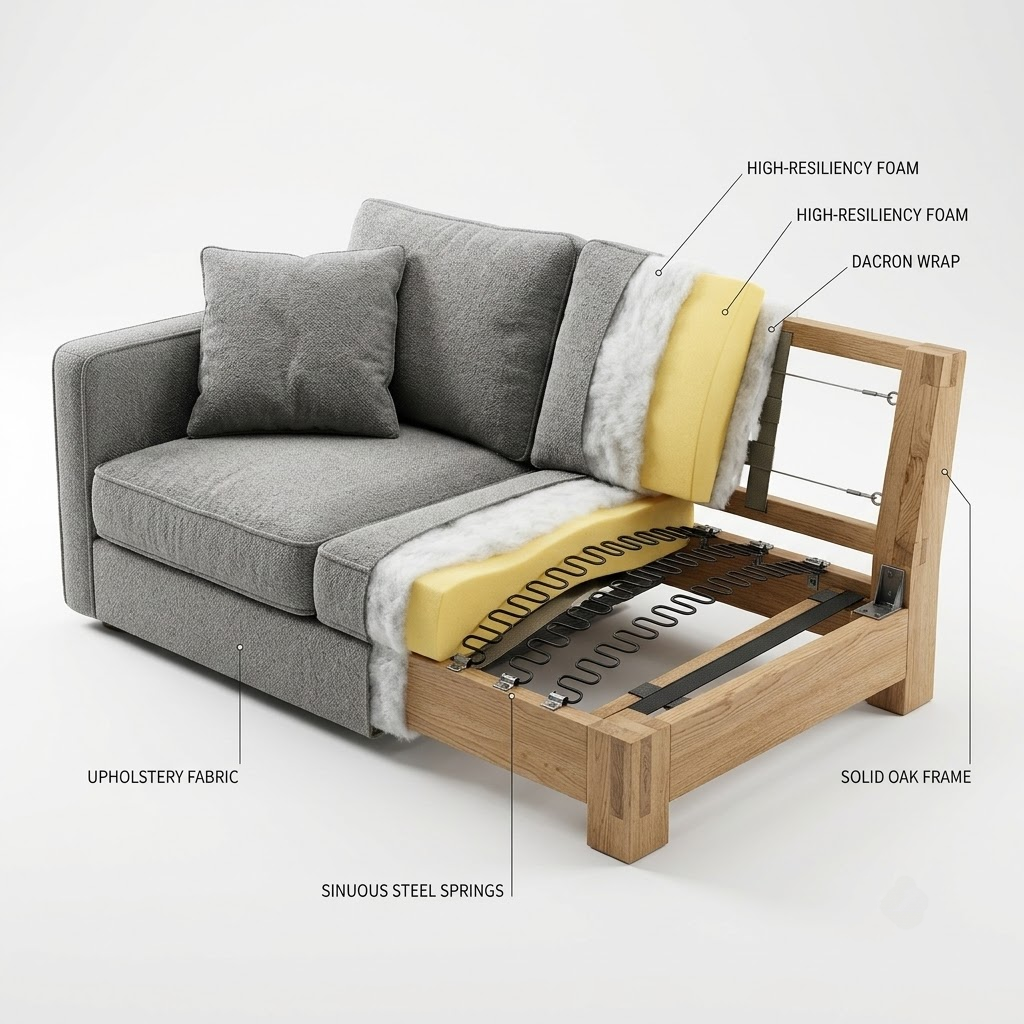
- Commercial Foam Density: A true OEM sofa manufacturer specifies 2.5 to 2.8 lbs/cu.ft High-Resiliency (HR) foam, enveloped in a down or polyfill wrap, ensuring decades of heavy commercial use without sagging.
- Structural Integrity: Contract-grade frames utilize kiln-dried hardwood (6%–8% EMC) with mortise-and-tenon joinery, paired with 8-Gauge sinuous steel springs stabilized by lateral tie-wires for absolute weight distribution.
- Fire Compliance: MMK TRADE INC uses intrinsically fire-retardant foams that pass US CAL 117-2013 flammability standards without the use of toxic chemical additives.
Introduction: Why Beautiful Sofas Fail Prematurely
The upholstery market is notoriously opaque. When a B2B buyer evaluates a sofa in a showroom or via an online catalog, they are only seeing the external upholstery—the “skin.” However, a beautifully tailored Italian leather sofa will become completely unusable within a year if the internal skeleton and musculature are severely compromised.
The phenomenon known as “bottoming out” occurs when a user sits on a cushion and immediately feels the hard wooden rails of the frame beneath them. This catastrophic failure happens because budget-focused factories utilize low-density foam and cheap elastic webbing. For hotel developers, interior designers, and high-volume e-commerce brands, selling or installing a sofa that fails prematurely destroys brand reputation and invites massive warranty replacement costs.
To guarantee longevity, buyers must source from a dedicated OEM sofa manufacturer that transparently engineers the internal components for heavy commercial use. MMK Furniture Makers (operated by MMK TRADE INC) builds contract-grade upholstery from the inside out. This deep-dive guide dissects our uncompromising internal manufacturing standards.
- For a comprehensive overview of B2B procurement, CAL 117 fire safety laws, and container logistics, read our master pillar page: The Complete B2B Sourcing Guide to Wholesale Sofas & Commercial Couches.
- To learn about matching these sofas with solid wood casegoods, see our guide on: OEM/ODM TV Stand & Media Console Manufacturing Materials.
1. Custom Sofa Frame Construction: Kiln-Dried Hardwood
The frame is the skeleton of the sofa. If the frame warps, twists, or snaps, the entire piece of furniture is destroyed, regardless of how pristine the fabric remains.
1.1 The Danger of Particleboard and Green Pine
In an effort to slash costs, many low-tier factories construct frames using a mix of particleboard, OSB (Oriented Strand Board), and “green” (undried) pine. Particleboard cannot hold screws or heavy staples effectively. Under the repetitive stress of people sitting down, the staples pull out of the composite board, causing the frame to loosen and creak loudly. Furthermore, green pine contains high moisture; as it dries naturally inside a heated US home, it violently twists and cracks.
1.2 The MMK Standard: Kiln-Dried Hardwood & Engineered Birch Plywood
As a premium wholesale couches manufacturer, we utilize an entirely different class of custom sofa frame construction.
- Kiln-Drying (6%–8% EMC): We source high-grade hardwoods (such as Oak, Ash, and Beech) and place them in computer-monitored kilns. The heat slowly extracts moisture until the wood reaches a precise Equilibrium Moisture Content (EMC) of 6% to 8%. This ensures the wood is perfectly acclimatized to North American HVAC environments, preventing all future warping.
- Structural Plywood: For wide, curved armrests or sweeping back profiles, we utilize 18mm to 22mm thick, 11-ply Birch or Eucalyptus engineered plywood. This TSCA Title VI compliant plywood is cross-grained, meaning it has zero internal tension and boasts immense sheer strength.
- Mortise and Tenon Joinery: We never rely solely on staple guns. All load-bearing joints are locked together using traditional mortise-and-tenon or heavy double-dowel joinery. We then apply industrial PVA wood glue and reinforce every 90-degree corner with solid wood corner blocks screwed deep into the frame.
2. Suspension Engineering: 8-Gauge Sinuous Springs & Tie-Wires
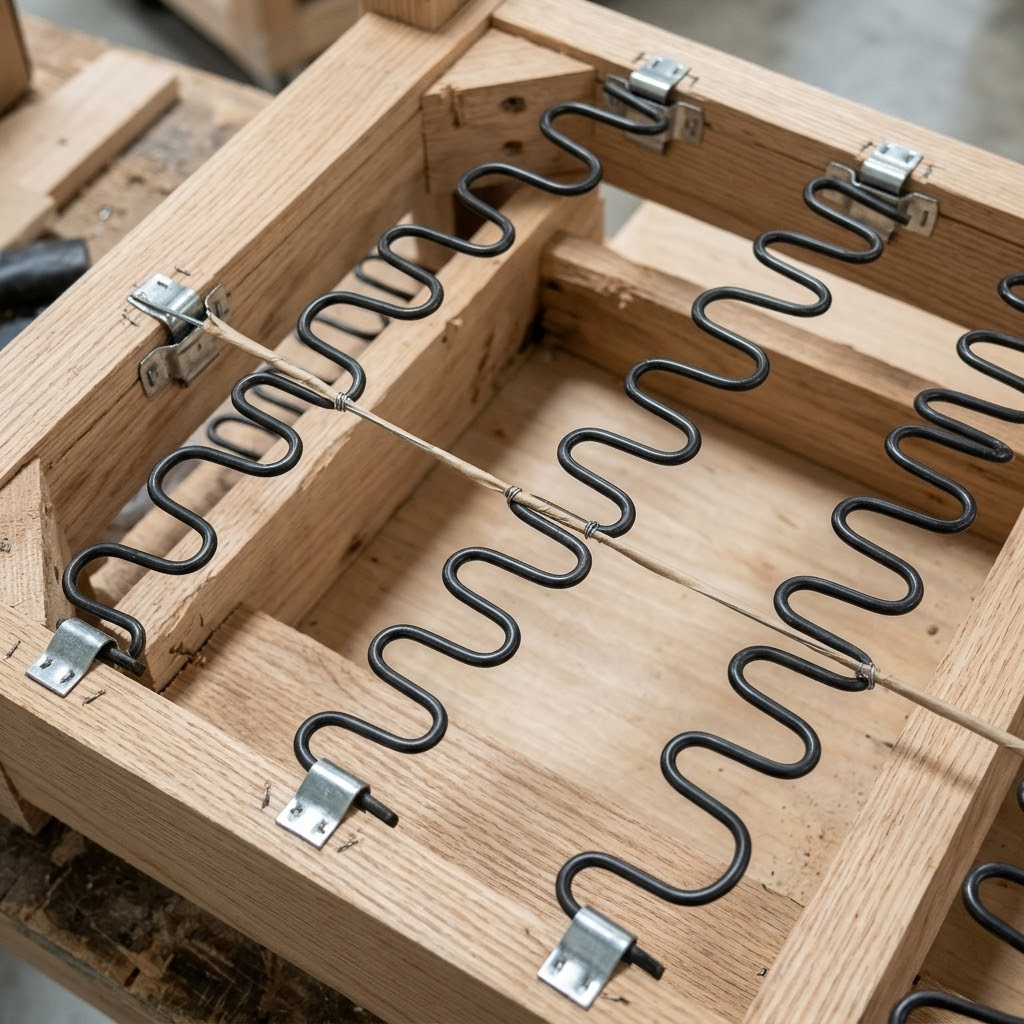
The suspension system acts as the shock absorber for the sofa. If the suspension stretches out, the cushions will sink deeply into the frame, regardless of how dense the foam is.
Many modern retail sofas rely entirely on elastic webbing (similar to rubber bands) stretched across the seat deck. While webbing is acceptable for backrests where body weight is distributed vertically, it will inevitably stretch and sag when used as the primary load-bearing support for the seat base.
The 8-Gauge Sinuous Spring System
MMK engineers commercial-grade seat decks using high-carbon steel Sinuous Springs (often called zig-zag springs). The thickness of the steel wire is critical. We strictly specify 8-Gauge steel for the seat deck—the thickest, most robust gauge used in the upholstery industry, capable of supporting immense commercial traffic without losing its recoil memory.
The Importance of the “Tie-Wire”
A critical differentiator of a high-end OEM sofa manufacturer is the use of tie-wires. We string paper-wrapped steel wires horizontally across the sinuous springs, binding them together. When a heavy user sits on one cushion, the tie-wire forces the adjacent springs to share the load. This lateral weight distribution prevents any single spring from bearing the brunt of the impact, virtually eliminating the risk of a broken spring piercing the fabric or sagging.
3. Commercial Sofa Foam Density Specs: The Science of ILD
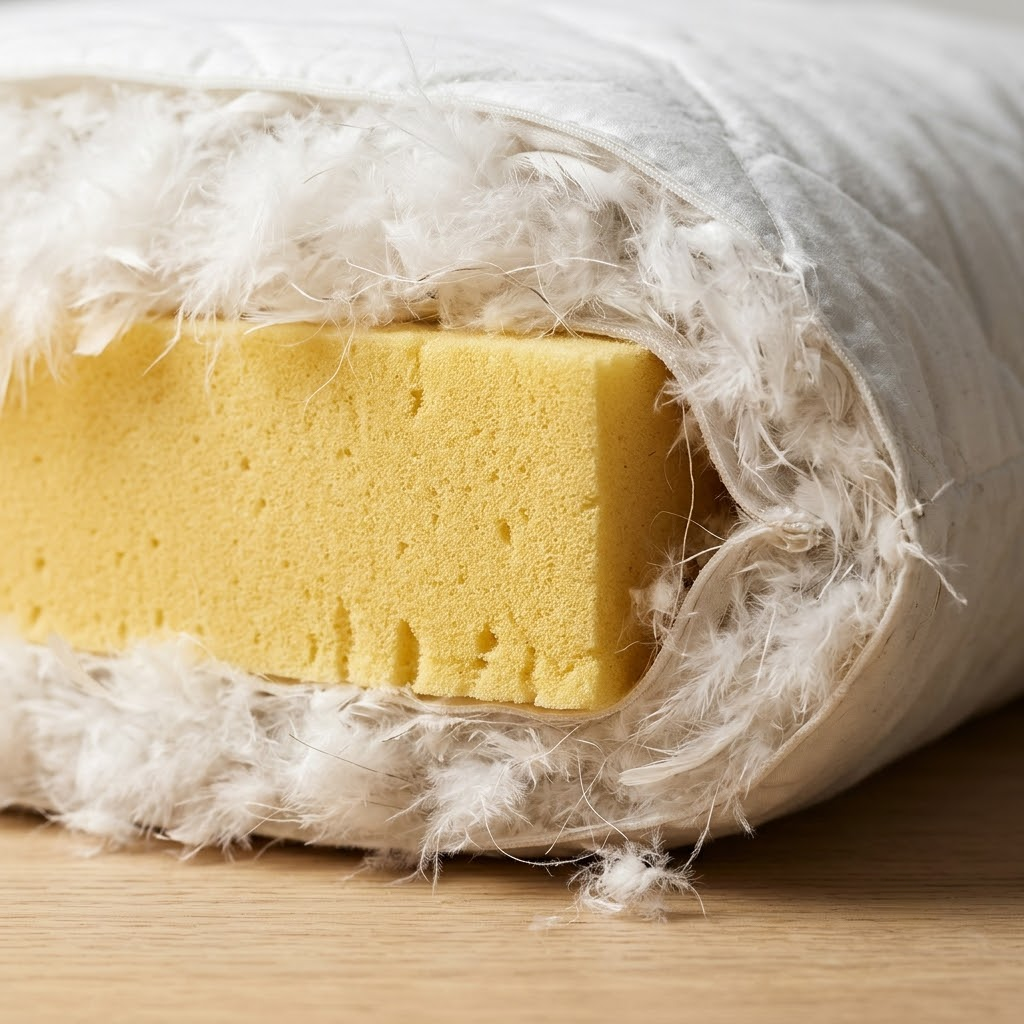
The chemistry of polyurethane foam is the single most important factor in upholstery longevity. B2B buyers must clearly specify commercial sofa foam density specs in their purchase orders.
3.1 Density vs. ILD (Firmness)
A common misconception is that a “firm” cushion is a “high-quality” cushion. Firmness and durability are entirely different scientific metrics.
- ILD (Indentation Load Deflection): This measures firmness. It is the number of pounds of pressure required to compress a 4-inch thick piece of foam by 25%. A high ILD means the foam feels stiff; a low ILD means it feels plush.
- Density (lbs/cu.ft): This measures durability and longevity. It is the actual weight of the polyurethane material in a 12″x12″x12″ block of foam. Higher density means more material and less empty air, meaning the cellular structure will not break down over time.
3.2 The 2.8 HR Commercial Standard
The vast majority of retail sofas use 1.5 to 1.8 lbs/cu.ft density foam. This is why a cheap sofa feels comfortable in the store but collapses into a pancake within 18 months.
As a contract-grade supplier, MMK utilizes High-Resiliency (HR) foam with a density of 2.5 to 2.8 lbs/cu.ft for our seat cores. HR foam features an open-cell structure that acts like millions of microscopic springs, instantly recovering its shape the moment a user stands up. A 2.8 HR foam core is engineered to endure 10 to 15 years of rigorous commercial use.
3.3 The “Sandwich” Comfort Envelope
Sitting directly on a block of high-density HR foam would feel like sitting on a firm mattress. To achieve a luxury, sink-in aesthetic without sacrificing core support, we employ the “sandwich” technique. We take the firm 2.8 density foam core and wrap it entirely in a thick envelope (or duvet) filled with sterilized goose down feathers and slick polyester fiberfill (Dacron). The down wrap provides the immediate, soft tactile comfort, while the HR core catches the body weight and prevents bottoming out.
3.4 Fire Retardant Compliance (CAL 117-2013)
It is vital to note that all internal foams processed by MMK TRADE INC are strictly compliant with California Technical Bulletin 117-2013 (CAL 117) flammability standards. We achieve smoldering resistance natively within the polyurethane chemical mix, completely avoiding the use of banned, toxic flame-retardant chemicals (such as PBDEs), ensuring safe indoor air quality for your clients.
4. Wood Finish Synchronization Across Furniture Categories
Many sofas feature exposed wood architectural elements—such as a continuous solid wood plinth base, exposed armrest caps, or mid-century modern tapered legs.
When a B2B buyer sources a sofa from a dedicated upholstery factory, but sources the TV stands and coffee tables from a separate casegoods factory, the wood stains will inevitably clash. A “Walnut” stain at Factory A will look vastly different from a “Walnut” stain at Factory B.
Because MMK TRADE INC operates as a fully integrated living room furniture manufacturer, we completely eliminate this batch variance. If you design a custom sofa with an exposed American Walnut base, we will manufacture your solid wood media consoles and side tables using the exact same veneer flitches and the exact same 5-stage polyurethane stain process in our finishing rooms. This guarantees 100% aesthetic cohesion across your entire retail collection or hospitality build-out.
5. B2B Sofa Manufacturing FAQ
Can I specify custom foam densities for my OEM sofa collection?
Do you use pocket coils inside the seat cushions?
What is the turnaround time for a custom sofa prototype?
Build a Sofa Collection That Lasts a Decade
Partner with MMK TRADE INC for uncompromising internal engineering, high-resiliency foam specs, and complete OEM customization.