
The Complete Guide to Sourcing Commercial and Wholesale Coffee Tables for US B2B Projects

⚡ Executive Summary for US B2B Buyers
- Surface Material Performance: Commercial hospitality and multi-family projects demand surfaces that survive standing water rings, hot coffee mugs, and sanitizing chemicals. Sintered Stone (Mohs 6–7) and 2K Polyurethane-Sealed Hardwood eliminate the etching and staining vulnerabilities of porous natural marble.
- ANSI/BIFMA X5.5 & Glass Safety: Contract-grade occasional tables must pass BIFMA X5.5 static load (200+ lbs) and concentrated drop tests. Glass elements must strictly conform to ANSI Z97.1 / 16 CFR Part 1201 safety glazing certification.
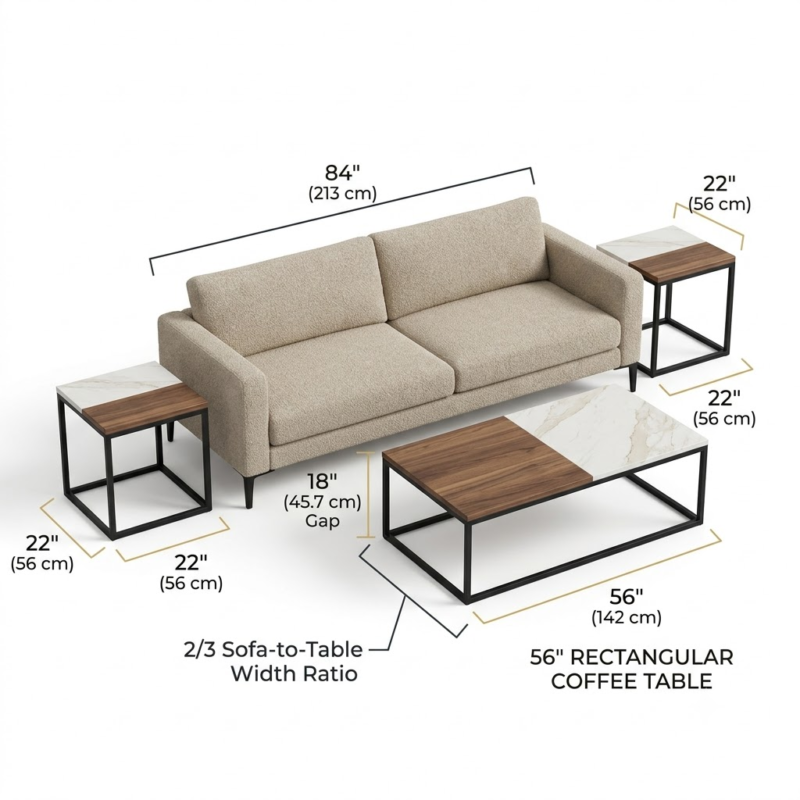
- Dimensional Ergonomics: A coffee table must measure 1/2 to 2/3 the total width of the sofa, rest at 16″ to 18″ in height (1″–2″ below the sofa seat plane), and maintain exactly 18 inches of perimeter legroom to satisfy ADA circulation paths.
- The 60/40 Ocean Freight Arbitrage: Coffee tables represent dense “heavy cargo.” Sourcing complete living room collections from a single furniture manufacturer allows you to combine 60% CBM sofas with 40% CBM flat-packed coffee tables, completely maxing out 40HQ container payload and volume limits simultaneously.
Introduction: The Strategic Anchor of the Living Space
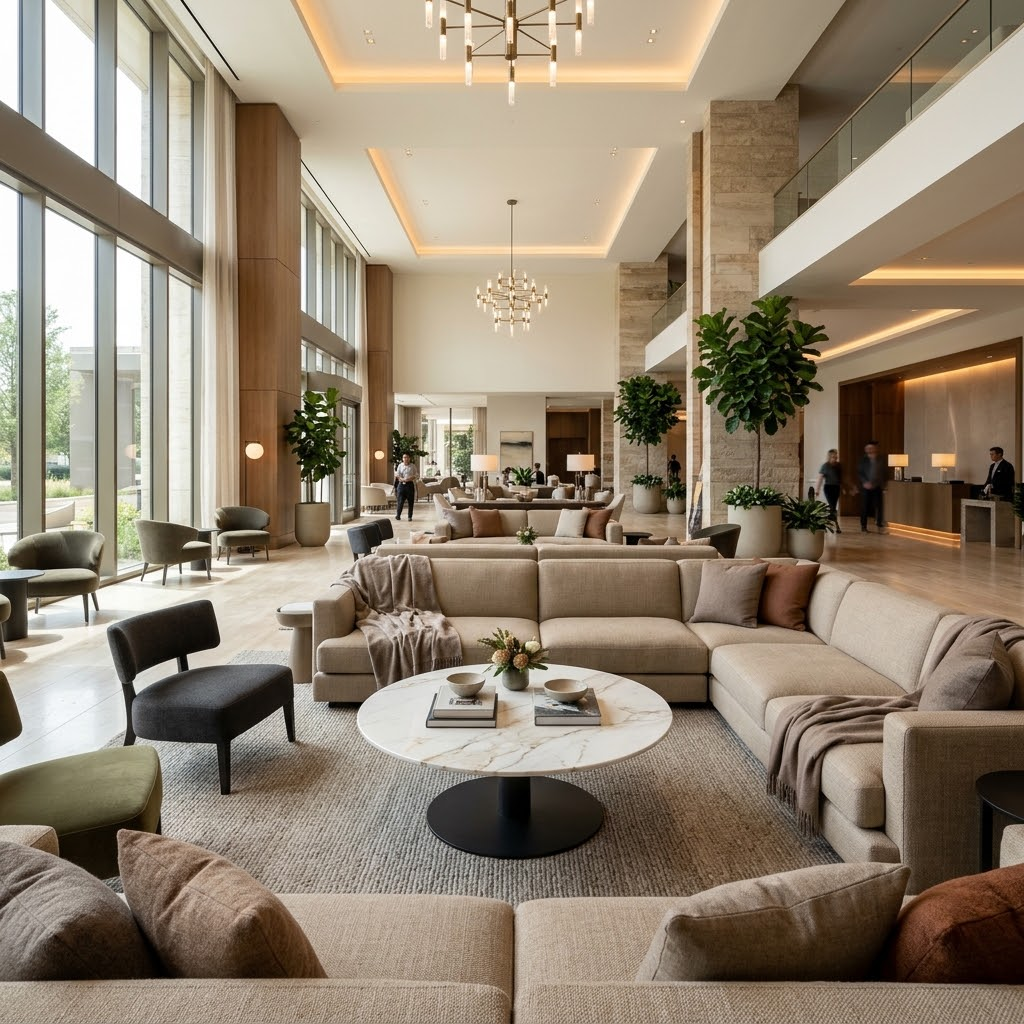
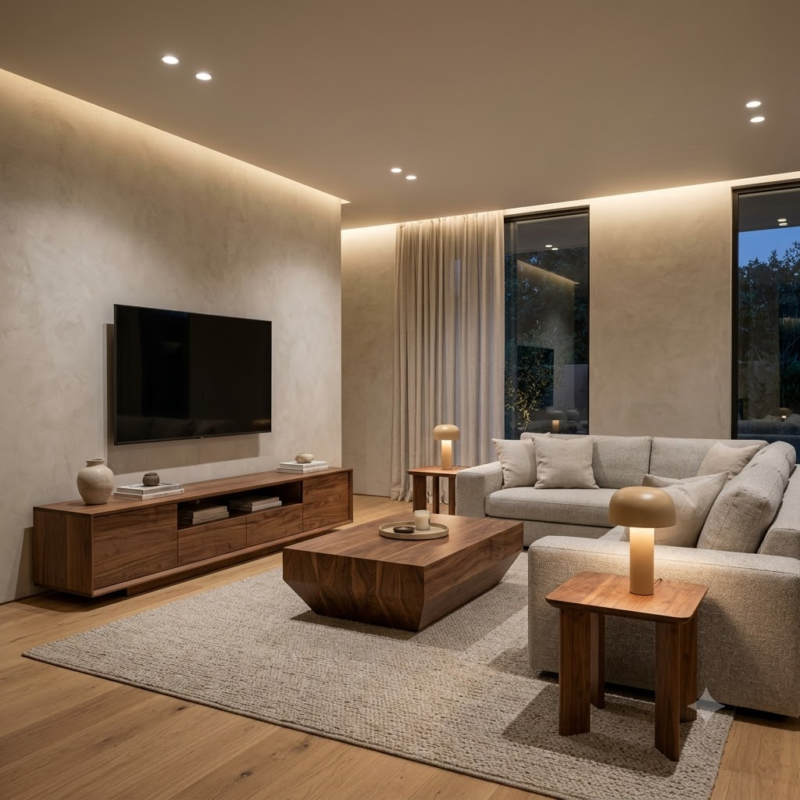
In residential living rooms, boutique hotel suites, and executive corporate lounges, the coffee table (or center table) serves as the primary visual nexus. While the sofa provides seating comfort, the center table facilitates human interaction. It holds computers, dinner trays, cocktail glasses, and reading materials, bearing constant contact from guests and maintenance personnel alike.
Despite its visual prominence, sourcing wholesale coffee tables remains one of the most operationally underestimated categories in commercial FF&E procurement. Purchasing retail-grade tables for commercial installations frequently leads to rapid degradation: soft-varnished veneers develop milky heat rings, porous marble absorbs acidic citrus and red wine spills, and flimsy assembly joints wobble under the weight of guests propping their feet up.
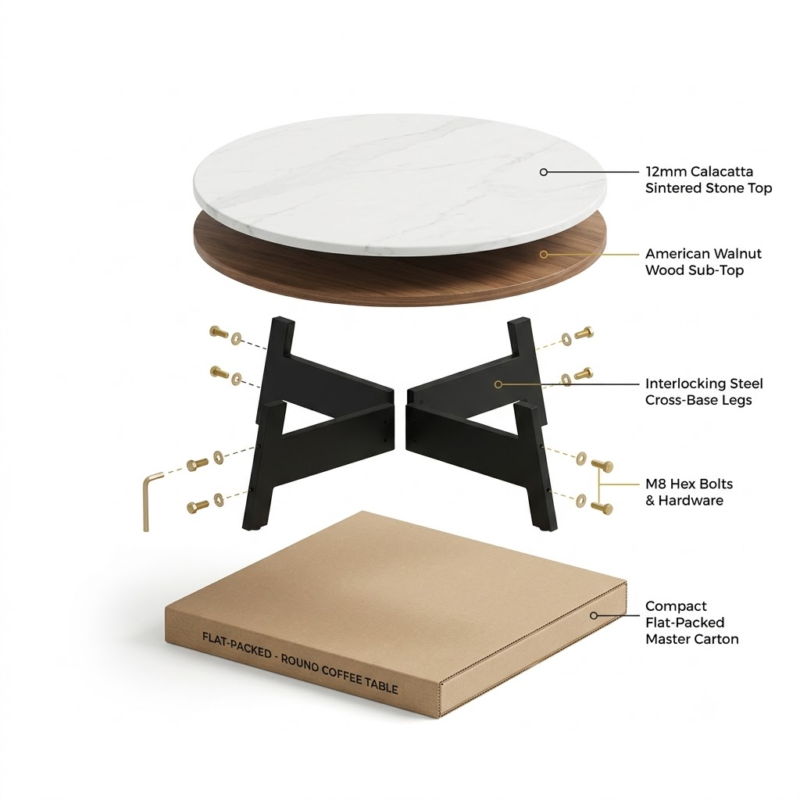
From an international logistics perspective, center tables represent high-density, flat-pack freight. Importers who attempt to ship isolated container loads of coffee tables hit container weight limits long before utilizing the cubic volume, leaving massive freight value on the table. Conversely, when paired strategically with lightweight, bulky modular seating, tables become the ultimate ocean freight equalizer.
As a direct B2B coffee table manufacturer and custom OEM/ODM exporter, MMK Furniture Makers (operated by MMK TRADE INC) builds high-resilience center tables that fuse architectural millwork with contract-grade durability. This comprehensive guide outlines the technical, ergonomic, and logistics benchmarks required to source center tables for the North American market.
- Coordinating center tables with casegoods? Read our master casegoods guide: The Complete B2B Sourcing Guide to Wholesale TV Stands & Media Consoles.
- Pairing tables with commercial seating? Consult: The Complete B2B Sourcing Guide to Wholesale Sofas & Commercial Couches.
1. Commercial Surface Materials: Sintered Stone vs. Wood vs. Glass
The horizontal tabletop is the component most exposed to daily wear. When evaluating samples from a custom coffee tables supplier, procurement teams must look past surface beauty and specify materials engineered to resist scratching, heat, and liquid absorption.
1.1 Sintered Stone: The Ultimate Commercial Surface
Natural marble has long been prized in luxury hospitality, but it is notoriously porous. Even sealed marble etches when exposed to lemon wedges or coffee spills, and cracks easily under point impacts. For contract use, MMK strongly advocates for Sintered Stone.
- Mineral Formulation: Formed under 15,000+ tons of pressure and fired at 1,200°C, sintered stone mimics the natural metamorphic formation of stone in hours.
- Hardness & Porosity: Achieving a Mohs Hardness of 6 to 7, it resists knife scratches and key abrasions. With a near-zero water absorption rate (<0.05%), red wine, grease, and acidic cleaners cannot penetrate its matrix.
- Structural Lamination: For commercial bulk center tables, we bond 6mm to 12mm sintered stone slabs onto reinforced E0-grade plywood or aluminum honeycomb backer plates, distributing kinetic shock and preventing edge chipping.
1.2 Solid Hardwood & Architectural Veneers
Natural wood delivers biophilic warmth that synthetic materials cannot duplicate. When specifying wood tables for hotel guestrooms and residential developments, two structural standards are mandatory:
- Kiln-Drying Control: Solid wood tops (Oak, Ash, Walnut) must be kiln-dried to an Equilibrium Moisture Content (EMC) of 6% to 8%. This prevents the panels from expanding, cupping, or checking under North American central heating and dry winter climates.
- 2K Catalyzed Polyurethane Finish: Standard nitrocellulose lacquer dissolves under alcohol and hot water. MMK applies a 5-coat, 2-component (2K) catalyzed polyurethane seal that acts as an impermeable shield against thermal shock up to 212°F (100°C) and commercial sanitizing sprays.
1.3 Tempered Safety Glass (ANSI Z97.1 Standard)
Glass coffee tables provide an airy, modern aesthetic that visually enlarges small footprints. However, using annealed (standard) glass in a commercial venue is an extreme liability. Every glass component engineered by MMK is fully tempered safety glass tested to ANSI Z97.1 / 16 CFR Part 1201 standards. In the event of catastrophic impact, the glass disintegrates into tiny, blunt, pebble-sized granules rather than jagged shards.
| Material Category | Scratch Resistance | Stain & Chemical Defense | Maintenance Level | Recommended Application |
|---|---|---|---|---|
| Sintered Stone | Exceptional (Mohs 6–7) | Impervious (<0.05% absorption) | Zero maintenance | High-traffic hotel lobbies, bars, multi-family common areas. |
| 2K-Sealed Hardwood | Moderate (Vulnerable to deep gouges) | High (When sealed with 2K PU) | Low (Occasional conditioning) | Executive suites, private guestrooms, residential catalogs. |
| Tempered Glass | Moderate (Micro-scratches over time) | Total (Non-porous) | Medium (Daily fingerprint wiping) | Compact urban apartments, corporate reception zones. |
| HPL / Compact Laminate | High (Abrasion-resistant overlay) | Total (Resists hospital-grade cleaners) | Zero maintenance | Student housing, healthcare lounges, high-wear retail. |
2. Structural Engineering & US Safety Compliance (BIFMA & ANSI)
In commercial environments, center tables undergo unexpected structural loads. Guests lean full body weight against table perimeters, children stand on surfaces, and maintenance crews repeatedly drag tables across carpeted floors. Specifying wholesale coffee tables requires verified physical test compliance.
2.1 ANSI/BIFMA X5.5 Desk and Table Testing Protocols
The definitive commercial performance standard in the United States is ANSI/BIFMA X5.5. Contract-grade center tables manufactured by MMK are subjected to three critical load tests before export approval:
- Static Distributed Load Test: A continuous distributed load of 200 to 250 lbs (90 to 113 kg) is applied across the tabletop for 60 minutes. The top panel must demonstrate zero permanent center-span deflection.
- Concentrated Proof Load Test: A concentrated weight of 150 lbs (68 kg) is applied within a 12-inch diameter circle at the absolute weakest edge or corner of the table. The unit must not tip, and joinery must not pull loose.
- Leg Racking & Horizontal Pull Test: A horizontal static force is applied to the top edge while the feet are clamped to the floor, simulating the dynamic stress of a user pushing the table across high-pile carpet. Metal chassis and leg dowel joints must show zero mechanical shear or joint separation.
2.2 Base Geometries & Edge Safety
Sharp 90-degree square edges in high-traffic corridors pose physical injury liabilities. For commercial projects, our CAD engineers recommend specifying Radius Edges (bullnose, beveled, or 3mm eased corners) on both stone and solid wood surfaces. For table bases, heavy powder-coated tubular steel or continuous plinth pedestals ensure stability while withstanding vacuum cleaner and luggage impacts without denting.
3. Functional Engineering: Lift-Top Gas Struts & Nesting Sets

Driven by hybrid work patterns and compact urban footprints, functional occasional tables have become top-selling SKUs for both commercial developers and e-commerce platforms. However, incorporating mechanical moving parts introduces new failure points if inferior hardware is utilized.
3.1 Lift-Top Tables: Pneumatic Gas Struts vs. Cheap Coil Springs
Budget retail lift-top tables rely on raw metal coil tension springs. These mechanisms suffer from severe flaws: they snap shut with violent force (creating finger-pinch hazards), emit loud metal squeaks, and flex sideways under light typing pressure.
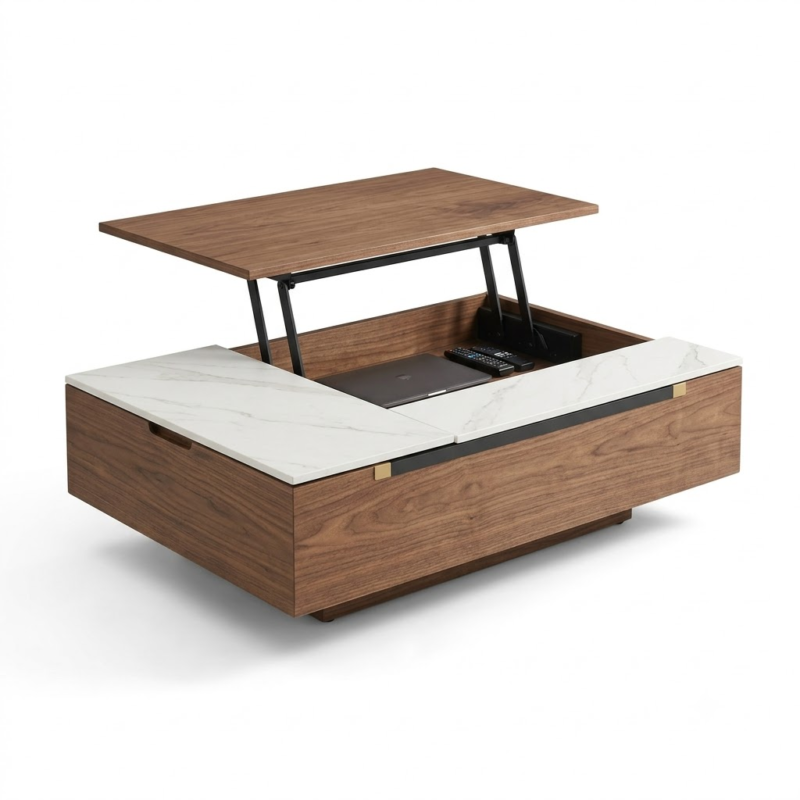
At MMK TRADE INC, every lift-top coffee table manufacturer order integrates Industrial Pneumatic Gas-Strut Lift Mechanisms:
- Controlled Soft-Close Dampening: Nitrogen gas cylinders ensure smooth, resistance-assisted upward motion and gentle, soft-close descent, entirely eliminating slam hazards.
- Heavy-Duty Cantilever Capacity: Engineered from 2.5mm stamped steel with cross-connecting synchronization bars, our lift mechanisms support 50+ lbs of static work surface load in the fully extended position without bowing.
- Concealed Storage Ventilation: The interior chassis beneath the lifted leaf provides ample space for remotes, gaming consoles, or laptops. We incorporate rear ventilation slots to prevent heat accumulation when storing electronics.
3.2 Nesting Tables: Space-Efficient Modularity
For boutique hotel rooms and dynamic multi-family lounges, Nesting Coffee Table Sets offer unmatched versatility. Our OEM engineering ensures the secondary and tertiary tables slide completely beneath the primary table frame with precision 15mm clearances, equipped with non-marking nylon glide pads that protect hardwood floors from friction scratches.
4. Ergonomics & Proportion: The 2/3 Width & 18-Inch Rules
Interior designers and procurement officers often source tables based purely on visual style, neglecting the dimensional relationships that dictate room comfort. Improperly sized tables disrupt circulation and compromise guest ergonomics.
4.1 The 2/3 Sofa Width Rule
A center table must maintain proportional balance with its anchor sofa. A table that is too small appears lost, while one that matches the sofa’s full length blocks side passage.
- The Mathematical Ratio: The total width of the coffee table should measure between 1/2 to 2/3 (50% to 67%) of the total width of the sofa seating deck.
- Practical Application: For an 84-inch 3-seater sofa, the optimal coffee table width is 42 to 56 inches. For large U-shaped or L-shaped sectionals, round or square tables (36″ to 42″ diameter) are preferred, providing equidistant reach from all seated positions.
4.2 Vertical Alignment: The 1-to-2 Inch Drop
Commercial sofa seat heights typically measure 17 to 19 inches from the finished floor. To allow a natural downward reach for beverages without obstructing forward sightlines to the TV stand, the coffee table top should sit 1 to 2 inches lower than the sofa seat cushion (typically 16 to 18 inches total table height).
4.3 The 18-Inch Perimeter Clearance Rule
Placing a table too close to a sofa traps knees; placing it too far requires leaning forward uncomfortably to place a glass. The universal contract standard is exactly 18 inches (45 cm) of unobstructed clearance between the edge of the sofa cushion and the perimeter of the coffee table. This preserves ample legroom while permitting seamless passage across the primary circulation route.
5. Freight Economics: The 60/40 Weight vs. Volume Container Strategy

International shipping costs directly dictate landed wholesale margins. Standard 40-foot High Cube (40HQ) ocean containers present a structural balancing challenge: they are constrained by usable volume (approx. 68 CBM) and statutory road weight limits (approx. 22 to 26 metric tons in the US).
5.1 The Freight Arbitrage of Heavy vs. Bulky Cargo
Sofas and couches represent classic “light/bulky” cargo . A container packed purely with assembled sofas hits the 68 CBM volume limit while weighing under 7,000 kg, meaning you pay for unused payload capacity. Conversely, stone and solid wood center tables represent dense “heavy” cargo . A container loaded solely with tables will exceed highway weight limits when only half full of volume, forcing you to pay for unused CBM.
5.2 The MMK 60/40 Consolidation Protocol
By managing multi-category production across our facilities, MMK TRADE INC solves this inefficiency through strategic container consolidation:
- Floor Layer (40% CBM / High Density): We place dense, flat-packed wholesale coffee tables, side and end tables, and TV consoles directly onto the container floor. Their high structural integrity and reinforced packaging form a solid platform.
- Upper Layer (60% CBM / Low Density): On top of the flat-pack base, we load boxed Knock-Down (KD) commercial sofas and lounge seating.
- The Financial Result: The container reaches both 65+ CBM volume utilization and near-maximum road weight capacity. This dual-fill strategy reduces the effective landed ocean freight cost per table by up to 45% compared to LCL or single-category container loads.
5.3 ISTA 3A Drop-Tested Flat-Pack Packaging
To ensure zero shipping damage across US parcel (FedEx/UPS) and LTL delivery networks, MMK packages all center tables to rigorous ISTA 3A transit standards. Heavy stone and glass tops are encased in molded high-density EPE foam cradles, reinforced with 275-lb double-wall corrugated outer cartons and rigid honeycomb edge-corner protectors.
6. Custom OEM/ODM Prototyping & Quality Control Workflow
MMK TRADE INC operates as a dedicated manufacturing partner for hospitality design firms, brand licensors, and high-volume commercial furniture dealers. Our production pipeline follows a structured, milestone-driven workflow:
- Shop Drawings & FEA Stress Modeling: Submit your architectural CAD sketches, rendering concepts, or reference images. Within 3 to 5 business days, our engineering department outputs fully detailed 2D/3D fabrication drawings with finite element stress analysis for cantilevered leaves and leg junctions.
- Material Swatch Validation: We dispatch curated swatch binders—including real sintered stone cutouts, 2K-finished hardwood samples, and electroplated metal chips—directly to your US procurement office for stakeholder approval.
- Physical Prototyping (Golden Sample): Within 14 to 21 days, our sample workshop builds a full-scale prototype. The unit undergoes internal BIFMA X5.5 load testing, drop packaging audits, and surface chemical resistance checks before shipment authorization.
- Automated CNC Mass Fabrication: Utilizing multi-axis CNC stone bridge saws, precision automated edge-banders, and robotic laser tube-cutters, mass production proceeds with sub-millimeter repeatable tolerances.
- Turnkey DDP Ocean Logistics: MMK manages international customs filing, ISF submissions, harbor drayage, and final door-to-door delivery with duty paid directly to your regional distribution centers.
7. B2B Wholesale Coffee Table Sourcing FAQ
Q1: What are the minimum order quantities (MOQ) for custom coffee tables?
Q2: How do you guarantee wood stains match between coffee tables and TV stands?
Q3: Are your sintered stone coffee tables susceptible to edge cracking during transit?
Q4: Can we mix living room tables with commercial dining and office furniture?
Ready to Source Contract-Grade Coffee Tables?
Partner directly with MMK Furniture Makers for BIFMA-tested center tables, sintered stone durability, and optimized 40HQ container consolidation.
✅ Smooth Pneumatic Lift-Top Hardware
✅ Turnkey US Door-to-Door DDP Logistics






5 thoughts on “The Complete Guide to Sourcing Commercial and Wholesale Coffee Tables for US B2B Projects”